
Itinerary guide
Sikkim itinerary
A proven day-by-day plan for Sikkim: Gangtok, Tsomgo Lake, Pelling and North Sikkim, from a government-approved operator, with a straight answer on permits and the best months to travel.
Updated · Written by the Era Tours team, New Delhi
A good Sikkim itinerary needs five to seven days and moves through three distinct landscapes: Gangtok and the high-altitude Tsomgo Lake, the Kanchenjunga views of Pelling and Yuksom in the west, and the glacial meadows of Lachung and Yumthang in the north. Foreign nationals need permits for several of these stops, and Nathu La itself is closed to non-Indian citizens, so we plan the route with the paperwork built in from day one. Below is the plan we run for guests, day by day, and it pairs naturally with our North Eastern Mystery tour.
How many days do you need?
5 days covers Gangtok, Tsomgo Lake and Pelling at a reasonable pace. 7 days is the version we recommend, adding Yuksom and a proper two-night base in North Sikkim so Yumthang Valley isn't a single rushed day-trip from Gangtok. 10 days lets you slow down further, add a village homestay, or combine Sikkim with Darjeeling, which shares the same Bagdogra gateway.
The 7-day Sikkim itinerary, day by day
Day 1: Arrive Bagdogra → Gangtok (≈125 km, ~4–5 hrs). Fly into Bagdogra, in the plains of West Bengal, and drive up through tea gardens and forested hills to Gangtok, Sikkim’s capital, perched on a ridge above the Teesta valley at around 1,650 metres. The climb takes most of an afternoon, so we keep the first evening easy: settle into your hotel, acclimatise gently, and stroll the pedestrian MG Marg, Gangtok’s flower-lined main promenade, for your first Sikkimese thukpa or momos.
Day 2: Gangtok → Tsomgo Lake → Gangtok (≈40 km each way). A permit day trip up to Tsomgo Lake (also spelt Changu Lake), a glacial lake at over 3,700 metres that is often rimmed with snow and framed by prayer flags. Foreign nationals travel this stretch with a registered guide under a Protected Area Permit; Nathu La Pass itself, further along the same road, stays off-limits to non-Indian citizens. Back in Gangtok, an afternoon free for the Enchey Monastery or the ropeway across the valley.
Day 3: Gangtok → Pelling (≈115 km, ~5 hrs). Drive west across Sikkim, dropping and climbing through terraced hillsides, to Pelling, which trades Gangtok’s bustle for uninterrupted views of the Kanchenjunga range on a clear morning. Visit Pemayangtse Monastery, one of Sikkim’s oldest and most important Nyingma monasteries, and the nearby ruins of Rabdentse, the old Sikkimese capital.
Day 4: Pelling: Khecheopalri Lake & Yuksom. A gentle day exploring West Sikkim: the sacred, undisturbed Khecheopalri Lake, said never to have a leaf floating on its surface, and Yuksom, where Sikkim’s first Chogyal was crowned in 1642 beneath the Norbugang throne. Yuksom is also the trailhead for the Kanchenjunga trekking routes, and its quiet, low-key village feel is a welcome contrast to Gangtok.
Day 5: Pelling → Gangtok → Lachung (≈150 km, ~6–7 hrs). A long but spectacular drive north into restricted North Sikkim, permits arranged well in advance, following the Teesta river deep into the mountains. Overnight at Lachung, a quiet apple-orchard village with a wooden monastery, ringed by snow peaks that catch the last light beautifully.
Day 6: Lachung → Yumthang Valley → Lachung. An early start for Yumthang Valley, the “valley of flowers”, a glacial meadow between snow peaks that turns brilliant with rhododendrons and primulas in spring and stays starkly beautiful year-round. Continue on to Zero Point if roads and permits allow, where you can stand in snow with glaciers close on every side, before returning to Lachung for the night.
Day 7: Lachung → Gangtok → Depart Bagdogra. Drive back down to Gangtok, with time for the Rumtek Monastery en route if your schedule allows, the seat-in-exile of the Karmapa and one of the most important Buddhist monasteries outside Tibet, then on to Bagdogra for your onward flight.
Permits for foreign visitors
Every foreign national travelling to Sikkim needs an Inner Line Permit (ILP), which is straightforward and usually arranged alongside your booking or on arrival. Restricted stretches, such as Tsomgo Lake, the approach roads towards Nathu La, and North Sikkim around Lachung and Yumthang, additionally require a Protected Area Permit (PAP), which typically calls for a registered local guide and, in some areas, travel in a group of two or more. Nathu La Pass itself remains closed to foreign nationals regardless of permit; Tsomgo Lake, on the same road, is the equivalent stop we build in instead. Rules and application channels for these permits change from time to time, including a recent shift towards applying online in advance rather than on the spot at checkposts and airports, so we always verify the current process against your travel dates rather than relying on last year's procedure. Indian nationals need only the standard Inner Line Permit, arranged in minutes at the Rangpo checkpost or online. We handle the ILP and PAP paperwork as part of the tailor-made booking, submitting passport, visa and itinerary details on your behalf so you arrive with everything already arranged.
Getting there: Bagdogra and the road up
Sikkim has no airport of its own for scheduled international connections in most itineraries, so the gateway is Bagdogra, near Siliguri in West Bengal, with regular flights from Delhi, Kolkata and other major Indian cities. From Bagdogra it is a four-to-five-hour drive up into the hills to Gangtok, climbing steadily through tea estates and small towns along the Teesta river. There is a smaller domestic airport at Pakyong, closer to Gangtok, though weather and limited flight frequency mean most of our guests still route through Bagdogra for reliability. Overnight trains run from Kolkata and further afield to New Jalpaiguri, the rail head nearest Bagdogra, for travellers who prefer rail to a short domestic flight.
Where to stay
Gangtok has the widest range of stays, from smart hillside hotels with Kanchenjunga views to simpler family-run guesthouses close to MG Marg. Pelling's hotels cluster around two viewpoints, Upper and Lower Pelling, and the better ones face the Kanchenjunga range directly, which is worth requesting when we book. In North Sikkim, Lachung and the smaller village of Lachen offer a handful of comfortable lodges rather than large hotels, reflecting the region's protected status and smaller scale of tourism; heating and hot water are more basic here than in Gangtok, which we brief guests on in advance. For a slower trip, a village homestay around Yuksom or Ravangla adds a genuine local dimension that a hotel simply cannot.
Best time to go
March to May is spring in Sikkim: rhododendrons in bloom across the hillsides and some of the clearest views of Kanchenjunga all year, making it the most photogenic season and the one we recommend most often for first-time visitors. October to mid-December follows the monsoon with crisp, dry air and equally good visibility, plus the added clarity of autumn light. The monsoon itself, June to September, brings the risk of landslides on mountain roads and can disrupt the drive to North Sikkim at short notice, so we generally steer guests away from it unless dates are fixed. Winter, from late December through February, brings snow to North Sikkim and can close some of the higher routes altogether, though Gangtok and Pelling remain accessible and quieter than in peak season. We route each trip around the season, and check road and permit conditions close to your dates rather than months in advance. See our best time to visit India guide for how Sikkim fits a wider itinerary.
Combine & extend
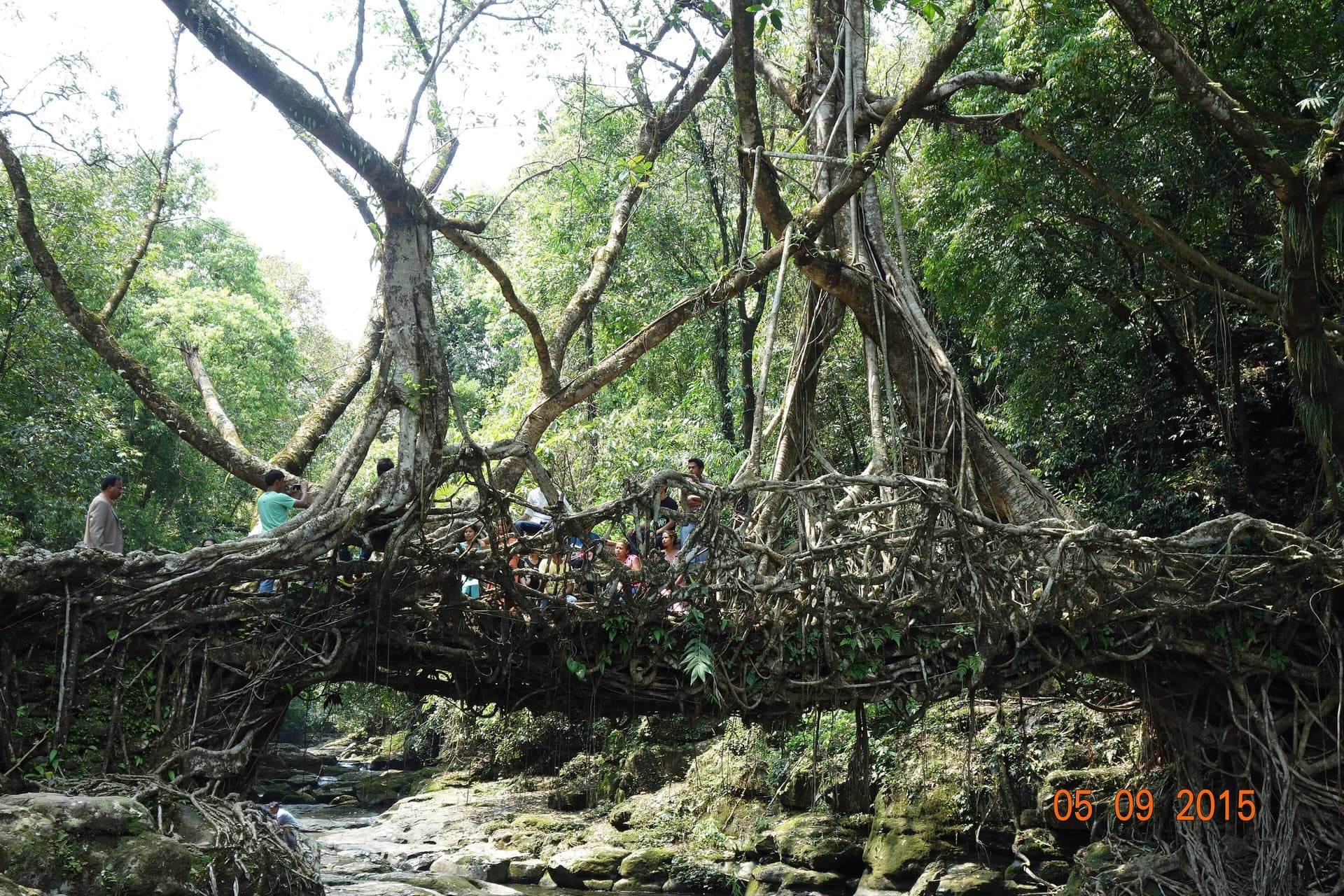
Sikkim connects easily with the wider North East on our North Eastern Mystery tour, taking in Assam and Meghalaya's living root bridges for guests who want a fuller regional picture, or with a short hop to Darjeeling for tea gardens, the Himalayan mountaineering institute and the toy train, sharing the same Bagdogra gateway and needing no separate flight. Guests coming from further afield often pair it with a Himalayan trip further west: see our Ladakh itinerary for the contrast between the eastern and western Himalaya, two landscapes that could hardly look more different despite sharing a mountain range. If you need visa guidance before booking flights, our India visa guide covers the essentials, including how the Sikkim permits sit alongside your Indian visa.
FAQ
Sikkim itinerary: frequently asked questions
Five days covers Gangtok, Tsomgo Lake and Pelling comfortably; seven is the sweet spot, adding Yuksom and a night in North Sikkim at Lachung or Yumthang. Sikkim is compact but its roads are slow mountain roads, so we build in realistic driving time rather than rushing between viewpoints. Ten days lets you slow right down and add a village stay.
A strong 7-day Sikkim itinerary is: arrive Gangtok and settle in; a day trip to Tsomgo Lake and (permits allowing) Baba Mandir; on to Pelling for Kanchenjunga views and Pemayangtse Monastery; a day at Yuksom, Sikkim’s first capital; then two days in North Sikkim around Lachung, with an early start for Yumthang Valley; and a final day back in Gangtok before departure.
Yes. Foreign nationals need an Inner Line Permit for Sikkim itself, arranged easily on arrival or online, plus a Protected Area Permit for restricted zones such as Tsomgo Lake, Nathu La approach roads and North Sikkim. Nathu La Pass itself is closed to foreign nationals entirely. PAPs generally require a registered local guide and, for some areas, travel in a group of two or more, and we handle the paperwork as part of the booking.
No. Nathu La Pass, on the India–China border, is restricted to Indian citizens with a valid permit and is off-limits to foreign nationals regardless of documentation. Foreign guests instead visit Tsomgo Lake, which sits on the same road and offers equally dramatic high-altitude scenery, along with North Sikkim’s Yumthang Valley for glacier and alpine views.
March to May brings rhododendrons and clear Kanchenjunga views, making spring the most photogenic season. October to mid-December is crisp, dry and equally clear after the monsoon clears. June to September is the monsoon, with landslides possible on mountain roads, and winter brings snow to North Sikkim, closing some high routes. We route around the season rather than fight it.
Yes, easily. Sikkim connects naturally with Darjeeling for tea gardens and the toy train, a few hours away by road, or with a wider North East circuit through Assam and Meghalaya. Bagdogra is the shared gateway airport for both Sikkim and Darjeeling, which keeps logistics simple even on a single two-week trip.
Want this Sikkim itinerary tailored to your dates?
Tell us your dates and pace and our Delhi team will turn this into a private, fully arranged Sikkim trip, permits, registered guides and vetted drivers, with us a WhatsApp message away.