
Destination guide
Kerala backwaters
What the backwaters are, where to cruise them, and what a night on a houseboat is really like, from a government-approved operator who has been sending guests there since 1997.
Updated · Written by the Era Tours team, New Delhi
The Kerala backwaters are a network of canals, rivers and lakes running behind the coastline, and a night on a houseboat gliding through them is, for most of our guests, the single most memorable part of a Kerala trip. Below is what they are, how Alleppey, Kumarakom and Kollam differ, what to expect aboard, how to travel through them responsibly, and how the backwaters fit into a wider Kerala route built around Munnar and Thekkady. It mirrors our Kerala, God's Own Country tour, which we tailor around exactly the questions on this page: which base to choose, how long to spend on the water, and when to go.
What are the Kerala backwaters?
The backwaters are a vast, interconnected system of lagoons, lakes and canals, more than 900 kilometres of them, running parallel to Kerala's coast, fed by dozens of rivers flowing down from the Western Ghats. Villages sit right at the water's edge: paddy fields cultivated below sea level and protected by mud embankments, coconut groves, small chapels and temples, and daily life carried out largely by boat, from the school run to the fish market. Cruising through on a houseboat gives you a view of Kerala that the roads simply cannot: the pace slows to the speed of the water, and the landscape unfolds a village, a temple or a paddy field at a time. It is this rhythm, more than any single sight, that makes the backwaters worth building a day around. The name itself covers a genuinely varied landscape: narrow shaded canals barely wider than the boat in places, broad open lakes where the far shore disappears into haze, and everything between, which is part of why the choice of base matters so much to how the trip feels.
Alleppey vs Kumarakom vs Kollam
Alleppey (Alappuzha), sometimes called the Venice of the East, is the traditional houseboat capital and the busiest, liveliest base, with narrow village canals, more boat traffic and glimpses of daily backwater life at close range, the classic choice for a first cruise and still the default we book for most guests. Kumarakom, on the broad Vembanad Lake (India's longest), is quieter and greener, with more open water and a bird sanctuary directly on the lake edge that draws migratory storks, herons and kingfishers between October and February, the pick for guests wanting stillness and birdlife over atmosphere and movement. Kollam, further south, is the least crowded starting point and connects naturally to a longer coastal drive towards Varkala's cliffside beaches, useful for guests who want the backwaters as one stop on a longer Kerala coast route rather than a single dedicated night. We choose the base to match the guest and the rest of the itinerary, not the other way round.
Houseboat types, and what a night aboard is like
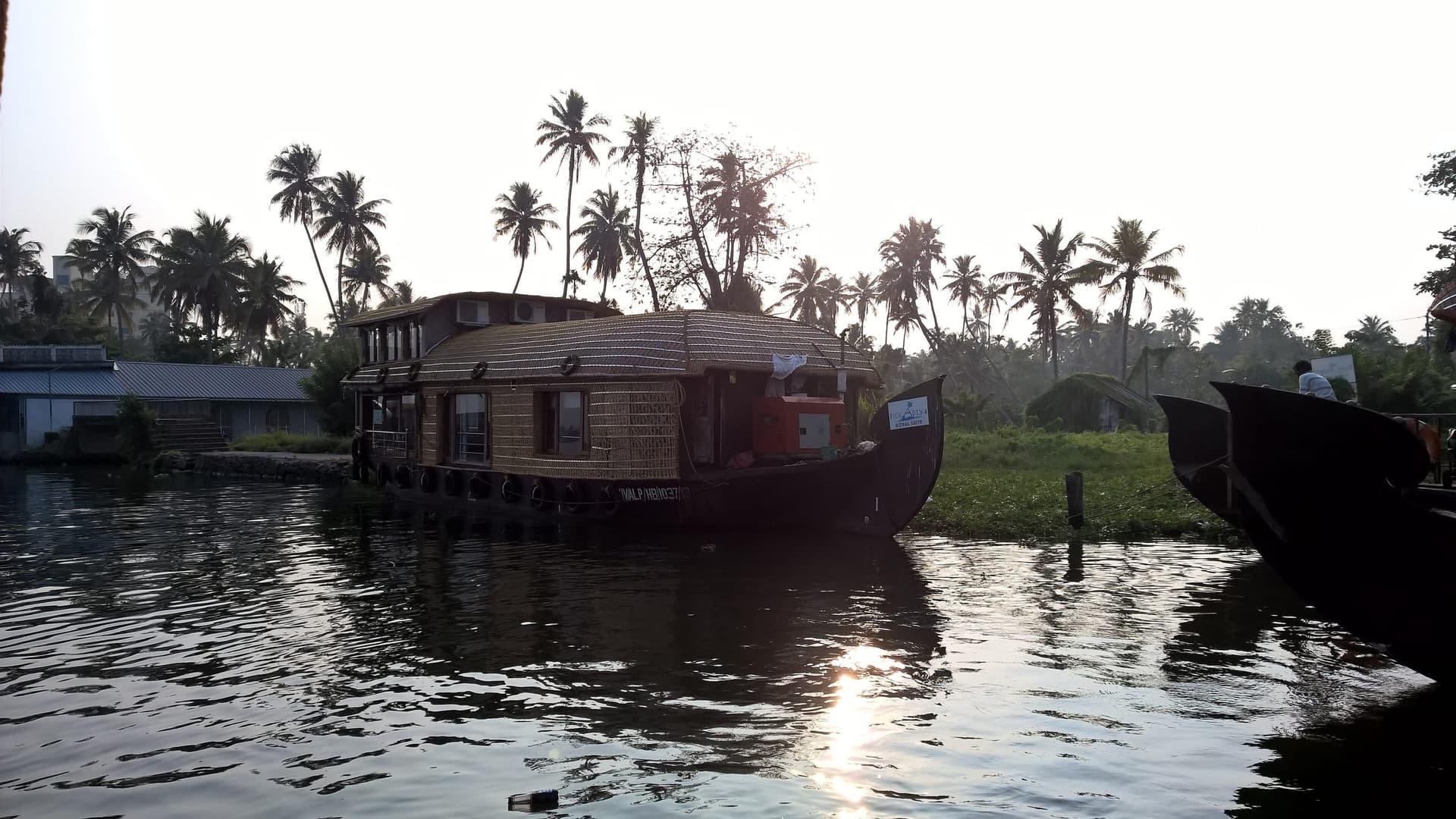
Most houseboats are converted kettuvallam, traditional rice barges once used to transport grain along the backwaters and now rebuilt with cabins, a shaded dining deck and a small galley kitchen, ranging from simple one-bedroom boats to larger multi-cabin versions for families or small groups travelling together. You board by early afternoon, cruise slowly through village canals and open lake stretches until sunset, and moor for the night in a quiet backwater rather than a marina or town, with only the sound of water and the occasional passing canoe. Your own crew, usually a captain and a cook, prepares fresh meals aboard through the day, typically Keralan staples like karimeen (pearl spot fish) curry, prawns, appam and fresh coconut chutneys, often using produce bought that same morning. Cabins are simple but comfortable, and most modern boats are air-conditioned with attached bathrooms. The lasting impression guests describe, almost without exception, is the quiet once the engine cuts for the night and the water goes still.
Travelling responsibly on the backwaters
The backwaters are a working ecosystem and a lived-in landscape, not a theme park, and the sheer number of houseboats now operating in the busiest stretches near Alleppey has made this a genuine concern for the region. We favour operators who manage waste and sewage properly rather than discharging into the canals, keep engine noise and wake to a minimum near villages and fishing boats, and support local crews and produce rather than imported catering. A single houseboat night, done thoughtfully with a responsible operator, has a far lighter footprint than a large flotilla cruising the same narrow canal at once, something worth asking about before you book, wherever you book from.
Combining with Munnar and Thekkady
The backwaters are one chapter of a complete Kerala trip, not the whole story. Most itineraries we build run tea-hill mornings in Munnar, with its rippling tea estates and cool plantation air, then spice gardens and a wildlife-rich lake cruise at Thekkady (Periyar), before descending through cardamom and rubber country to the backwaters for a houseboat night, usually finishing at Fort Kochi with its Chinese fishing nets and colonial lanes for the flight home. The contrast between hill and water, cool air and humid coast, is exactly what makes a Kerala trip feel complete rather than one-note. See our full Kerala itinerary for how the days fit together, or our luxury Kerala tours for a higher-end version of the same route.
Booking a houseboat: what actually matters
Not every houseboat is built or maintained the same way, and the difference shows up most in the small things: how well the cabin is insulated against the afternoon heat, whether the crew is genuinely experienced with the tidal stretches near Vembanad Lake, and how the boat handles waste. We hand-pick the operators and specific boats we use rather than booking whatever is available on the day, and we brief every guest on what to expect: the rhythm of the cruise, meal timings, and the difference between a canal route and a lake route, before they board. That groundwork is what turns a houseboat night from a pleasant boat ride into the highlight guests remember years later.
Best time to go
October to March is the reliable season for cruising, with November and December giving the clearest skies and coolest evenings, close to the best conditions South India offers all year. The monsoon (June–September) turns the backwaters a vivid, saturated green and is genuinely beautiful in its own right, with the paddy fields at their most dramatic, but rain can make open water choppy and some operators pause cruises in heavy downpours for safety, so we reserve it for guests specifically chasing Kerala's lush, quiet shoulder season rather than a first visit. April and May bring heat and humidity that most guests find uncomfortable for a full day on open water, so we route around them where the wider itinerary allows.
Getting to the backwaters
Kochi (Cochin) is the usual gateway, with direct flights from Delhi, Mumbai and most major Indian cities, and it is roughly a two-hour drive south to Alleppey or Kumarakom, making it easy to arrive, transfer straight to your houseboat and be cruising the same afternoon. Guests flying in from further south can also use Thiruvananthapuram (Trivandrum) airport, which sits closer to Kollam. Road connections across Kerala are generally good, and the drive itself, past rubber plantations and paddy fields, is a gentle introduction to the state before you even reach the water. We arrange private transfers throughout, so the transition from airport to houseboat is a single, unhurried journey rather than several separate bookings.
What to pack for a night on board
Light, breathable clothing suits the humid coastal climate year-round, along with a hat and sunscreen for the open-water stretches where shade is limited. Evenings can bring mosquitoes near the moorings, so we suggest repellent and something with sleeves for sunset onwards. Binoculars reward guests cruising near Kumarakom's bird sanctuary, and a dry bag for a phone or camera is sensible if you plan to take photographs from the open deck. Beyond that, the appeal of a houseboat night is precisely how little there is to plan for once you are aboard.
FAQ
Kerala backwaters: frequently asked questions
The Kerala backwaters are a network of over 900 kilometres of interconnected canals, rivers, lakes and lagoons running parallel to the Arabian Sea coast, fed by 41 rivers. Villages, paddy fields and coconut groves line the water, and a converted rice barge, the houseboat, is the classic way to experience them, cruising slowly past daily life you would otherwise never see from the road.
Alleppey, the traditional houseboat capital, gives you narrow village canals, more boat traffic and a livelier sense of backwater life. Kumarakom, on the wider Vembanad Lake, is quieter and greener, with its bird sanctuary drawing migratory storks and herons between October and February. Neither is objectively better; we choose based on whether guests want atmosphere or stillness.
You board by early afternoon and cruise gently until sunset, with the crew mooring for the night in a quiet backwater rather than a marina. Meals are cooked fresh aboard by your own crew, usually Keralan classics like karimeen fish curry and appam. Cabins are simple but comfortable, air-conditioned on most boats, and the overriding memory guests report is the silence after the engine cuts.
June to September turns the backwaters intensely green and is genuinely beautiful, but rain can make cruising choppy and some operators pause services in heavy downpours. We generally steer first-time guests towards October to March for reliable cruising, and reserve monsoon backwater trips for guests specifically chasing Kerala’s lush, quieter shoulder season.
One overnight houseboat cruise is enough to experience it properly and is what most guests book. A day cruise works if time is tight, but you miss the sunset and the still morning light. We typically pair one backwater night with two or three days in Munnar or Thekkady on either side, which is the shape of most complete Kerala itineraries.
Yes, this is the classic Kerala route: tea-hill mornings in Munnar, spice gardens and a wildlife-rich lake at Thekkady, then descending to the backwaters for a houseboat night, usually finishing at Kochi for the flight home. The contrast between hills and water is what makes a Kerala trip feel complete rather than one-note.
Want a Kerala backwaters trip built around your dates?
Tell us your dates and pace and our Delhi team will turn this into a private, fully arranged Kerala trip, a hand-picked houseboat, tea-country stays and coastal retreats, with us a WhatsApp message away.