
Itinerary guide
Ladakh itinerary
A proven 7-day plan for the high Himalaya — Leh, Nubra Valley over Khardung La, and Pangong Lake — from a government-approved operator, built around proper acclimatisation and the permits you’ll need.
Updated · Written by the Era Tours team, New Delhi
A great Ladakh itinerary needs seven days and is shaped by one thing above all — altitude. The plan below builds in a proper acclimatisation day in Leh, then the two iconic high-altitude drives to the Nubra Valley over Khardung La and to Pangong Lake over Chang La, threaded with ancient Buddhist monasteries. It mirrors our Journey to Ladakh tour, which you can book and tailor.
How many days do you need?
7 days is the ideal first Ladakh trip — a rest day plus Nubra and Pangong. 5 days is possible but tight and harder on the body. 10 days adds Tso Moriri, the Markha valley or remoter monasteries. We never rush the altitude: the acclimatisation day is non-negotiable, and the drives are sequenced so you gain height gradually.
The 7-day Ladakh itinerary, day by day
Day 1: Fly Delhi → Leh · Acclimatise. Fly into Leh (≈3,500 m) and rest completely for the day — the single most important thing you can do in Ladakh. Gentle strolls only, plenty of water, and an early night as your body adjusts to the altitude.
Day 2: Leh → Alchi → Leh. A gentle acclimatisation day along the Indus to Alchi Gompa, whose 10th–11th-century murals are among the finest in the Himalaya, passing the confluence at Sangam and Likir monastery.
Day 3: Leh → Nubra Valley (over Khardung La). Cross Khardung La — at around 18,000 ft one of the highest motorable roads on earth — into the Nubra Valley, with its sand dunes, double-humped camels and dramatic desert-meets-mountain scenery.
Day 4: Nubra Valley → Leh. Explore Nubra’s villages and the Diskit monastery with its great Maitreya Buddha, then return over the pass to Leh for the night.
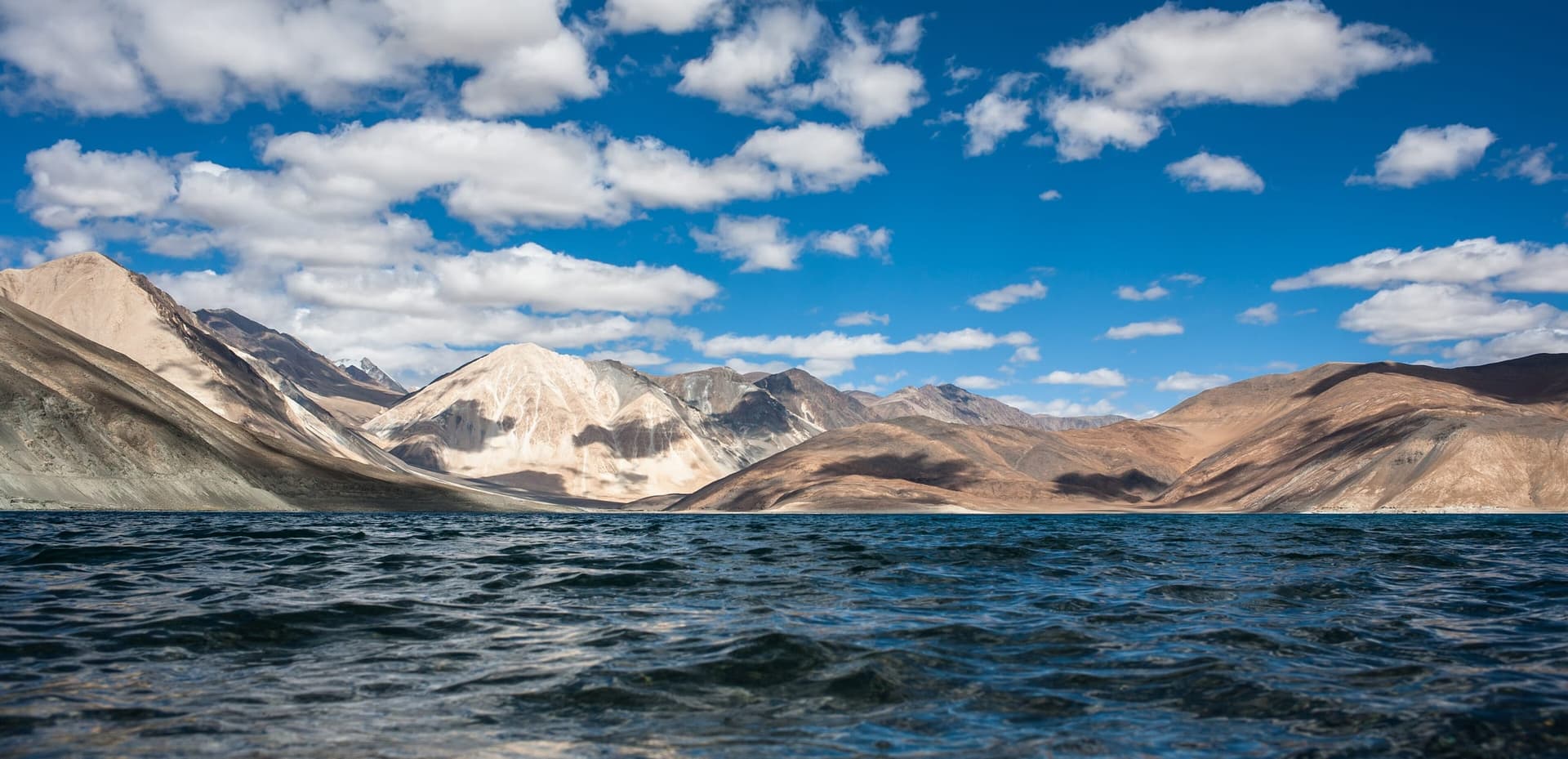
Day 5: Leh → Pangong Lake (over Chang La). Drive over Chang La to Pangong Tso, the extraordinary high-altitude lake that shifts through blues and greens against bare mountains. Camp on the shore for the light.
Day 6: Pangong → Leh (via Hemis). Wake for the dawn colours on the lake, then return towards Leh, visiting the great monastery of Hemis and Thiksey’s hilltop gompa on the way.
Day 7: Fly Leh → Delhi. A final morning in Leh’s bazaar and palace before your flight out — spectacular Himalayan views on the climb.
Acclimatisation & permits
Leh sits at around 3,500 m and the passes climb far higher, so rest on arrival, drink plenty of water, avoid alcohol, and gain altitude gradually — our itinerary is built to do exactly that. Nubra and Pangong also require Inner Line / Protected Area permits on top of your visa, which we arrange for you. See our India visa guide for how permits work.
Who Ladakh suits
Ladakh is one of the most rewarding places in India, but it asks more of a traveller than a lowland trip. The altitude means a slower rhythm, some long drives on rough mountain roads, and simpler accommodation once you leave Leh — this is grandeur, not luxury, though Leh itself has comfortable hotels. It suits travellers who want raw Himalayan landscape and living Buddhist culture over creature comforts, and who are in reasonable health. Anyone with a heart or respiratory condition should get medical clearance first, and we're always happy to talk through whether the trip is right for you before you commit.
Best time & combining
Ladakh is a summer destination — roughly June to September, when the passes are open. It pairs superbly with Kashmir for a full Himalayan journey, or bookends a trip that opens in Delhi. See our best time to visit India guide, and browse all hill-station tours.
FAQ
Ladakh itinerary — frequently asked questions
Seven days is the ideal length for a first Ladakh itinerary — it allows a day to acclimatise to the altitude in Leh, then the two great excursions to Nubra Valley and Pangong Lake, with monasteries along the way. Five days is possible but tight and harder on acclimatisation; ten days lets you add the Tso Moriri lake, the Markha valley or more remote monasteries. Altitude, not distance, sets the pace here.
A great 7-day Ladakh itinerary is: fly to Leh and rest to acclimatise; a gentle day to Alchi’s ancient monastery and back; over Khardung La to the Nubra Valley for its dunes and camels; back to Leh; over Chang La to camp by Pangong Lake; return via Hemis monastery; then fly out. It balances the two iconic high-altitude drives with proper acclimatisation and Buddhist heritage.
Leh sits at around 3,500 m, so acclimatisation is essential. The golden rule is to rest completely on your first day after flying in — no exertion, plenty of water, no alcohol — and to gain altitude gradually before the high passes and Pangong. Our itineraries build in that first rest day and sequence the drives so your body adjusts. Anyone with heart or respiratory conditions should consult a doctor before travelling.
Yes — the Nubra Valley, Pangong Lake and several other areas of Ladakh require Inner Line Permits (or Protected Area Permits for foreign nationals), on top of your Indian visa. These are exactly the kind of arrangement we handle as part of the tour, so you don’t have to navigate the paperwork yourself. See our India visa guide for how permits fit alongside your visa.
Ladakh is best from roughly June to September, when the mountain passes are open and the high desert is accessible; it is largely cut off by snow in winter, and the road approaches only open in the warmer months. July and August are the most reliable for the passes to Nubra and Pangong. See our best time to visit India guide for how it fits a wider Himalayan trip.
Want this Ladakh itinerary tailored to your dates?
Tell us your dates and fitness and our Delhi team will turn this into a private, fully arranged Ladakh trip — permits sorted, acclimatisation built in, vetted drivers throughout.